Macon County · Education
A family investment in education
Lee Andrew Jones graduated from Tuskegee Institute in 1912. His December 30, 1960 obituary in The Call describes his work as a Jeanes supervisor supporting rural education.
East Alabama · Land, labor, and family
Land. Labor. Family. The struggle to belong.
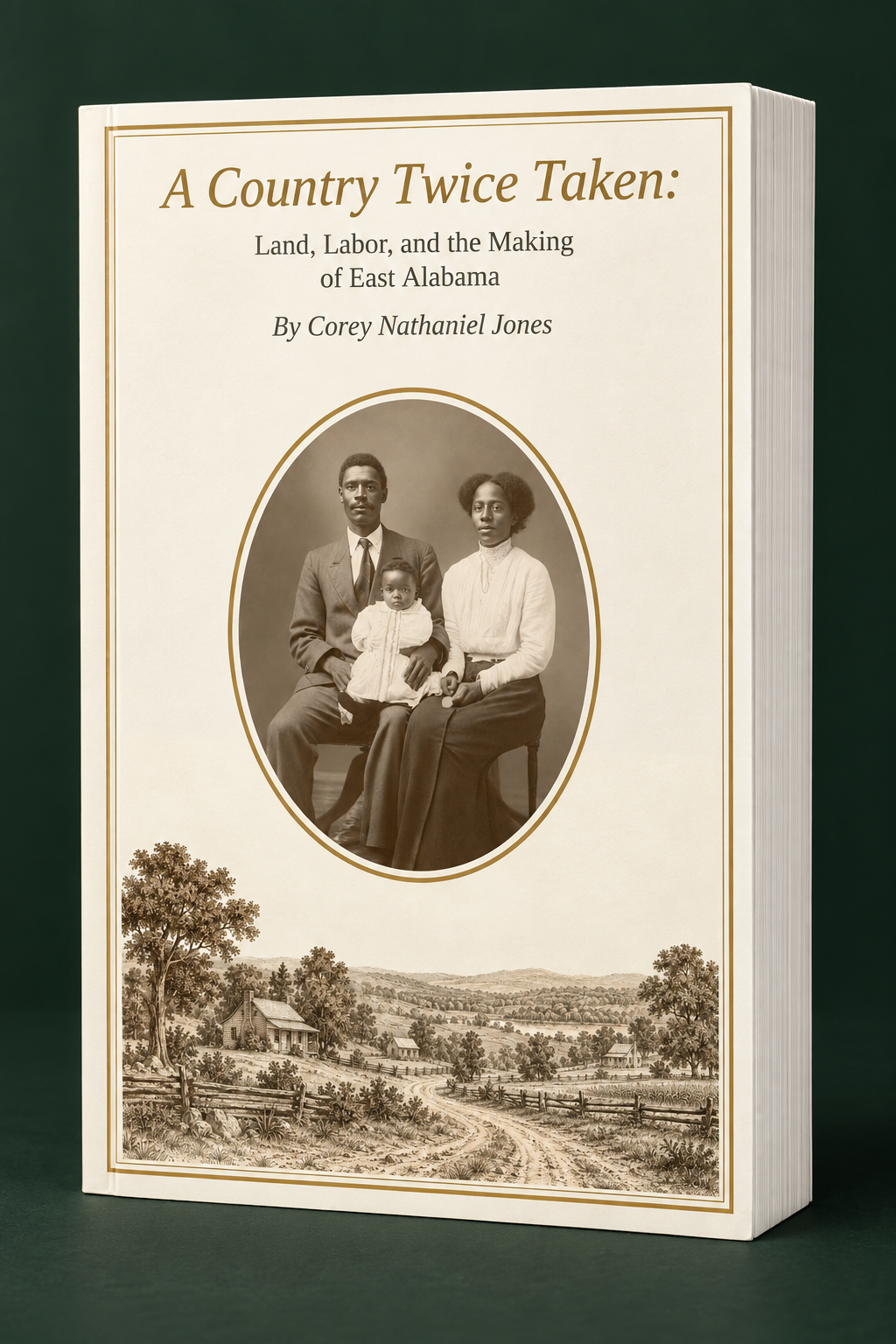
Corey Nathaniel Jones traces the history of East Alabama through his ancestors and the communities they helped build.
The places behind the pages
Follow the rivers, explore the terrain, and locate Indigenous history alongside the families and communities in the book.
Loading the map. Place histories will appear beside it.
Terrain uses sampled elevation data with approximately 28× vertical exaggeration to reveal the relief. Rivers, reservoirs, and county boundaries show modern geography, not the landscape at every historical date. Elmore County is included for Taskigi and the Coosa–Tallapoosa confluence. Location notes distinguish historic villages, community markers, and commemorative sites.
Terrain: Mapzen Terrain Tiles, with U.S. Geological Survey elevation data, sampled September 13, 2026. Resampled to an approximately 800-meter grid. Water: Natural Earth, 1:10 million and the USGS National Hydrography Dataset. County boundaries: U.S. Census Bureau / US Atlas, 2017. Water features are generalized; small streams and ponds are not all represented. Each history card provides its own source.
About the book
East Alabama was shaped by Muscogee dispossession and the exploitation of enslaved African Americans. Struggles over land, labor, and citizenship continued long after removal and emancipation.
In A Country Twice Taken, Corey Nathaniel Jones examines this history through his ancestors and their communities. Estate inventories, census records, oral histories, and photographs connect individual lives to the institutions that governed property, work, and freedom.
The book follows families through slavery, Reconstruction, racial violence, rural education, and migration. It examines how churches, schools, and kinship sustained communities, and how leaving Alabama or remaining there shaped later generations.
Distinguishing documentary evidence from family tradition, Jones places names and relationships within the history of a region. His account traces the struggle to establish a home, preserve a family, and claim a place in a society that repeatedly restricted those possibilities.
Behind the cover
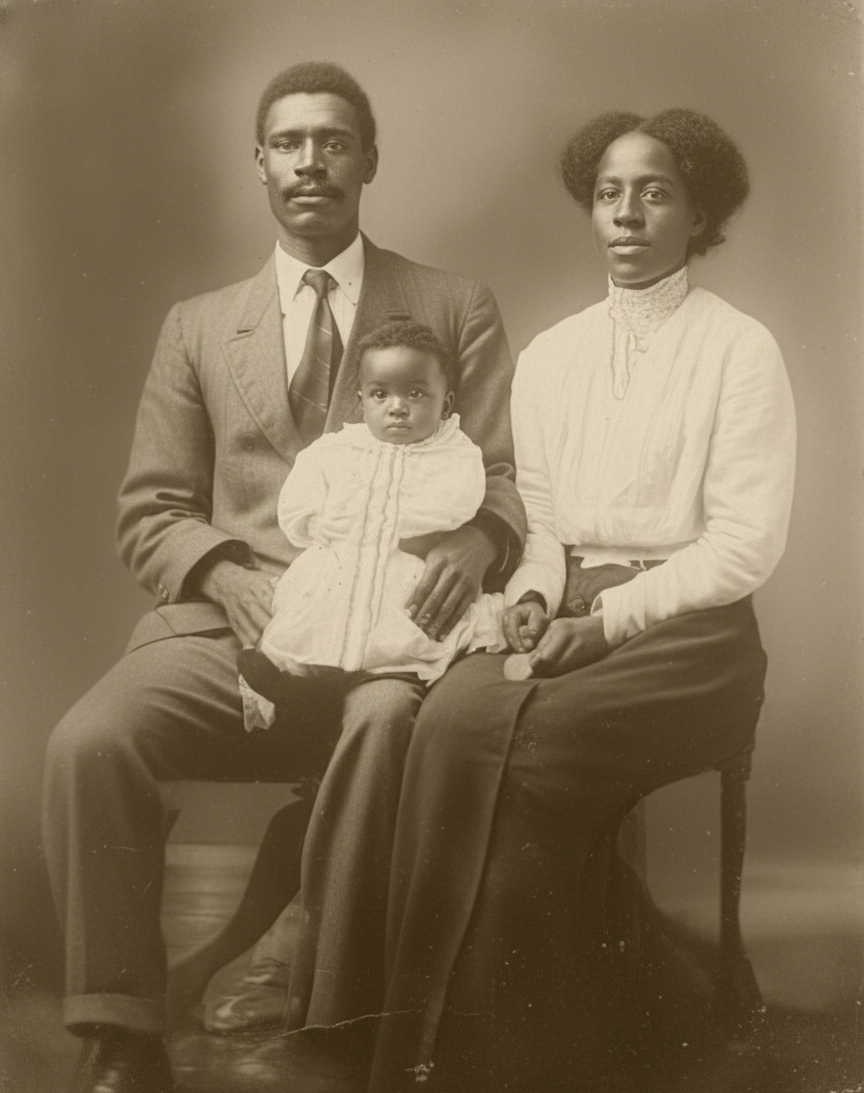
The family portrait at the center of the cover brings the book's history into focus: people whose lives reach beyond the entries that survive in official records.
For Jones, family knowledge and archival research belong in the same conversation. The book preserves what relatives remember while making clear what the records establish and what remains unresolved.
The photograph shown here is the supplied original. The book cover uses a contrast-adjusted reproduction.
Coming October 5, 2026
Land, Labor, and the Making of East Alabama
View editions and pricing on Amazon.